AlphaNIST

From AlphaGo to AlphaZero, reinforcement learning produced strategies that surprised expert players. AlphaZero learned from experience at scale, without human demonstrations.

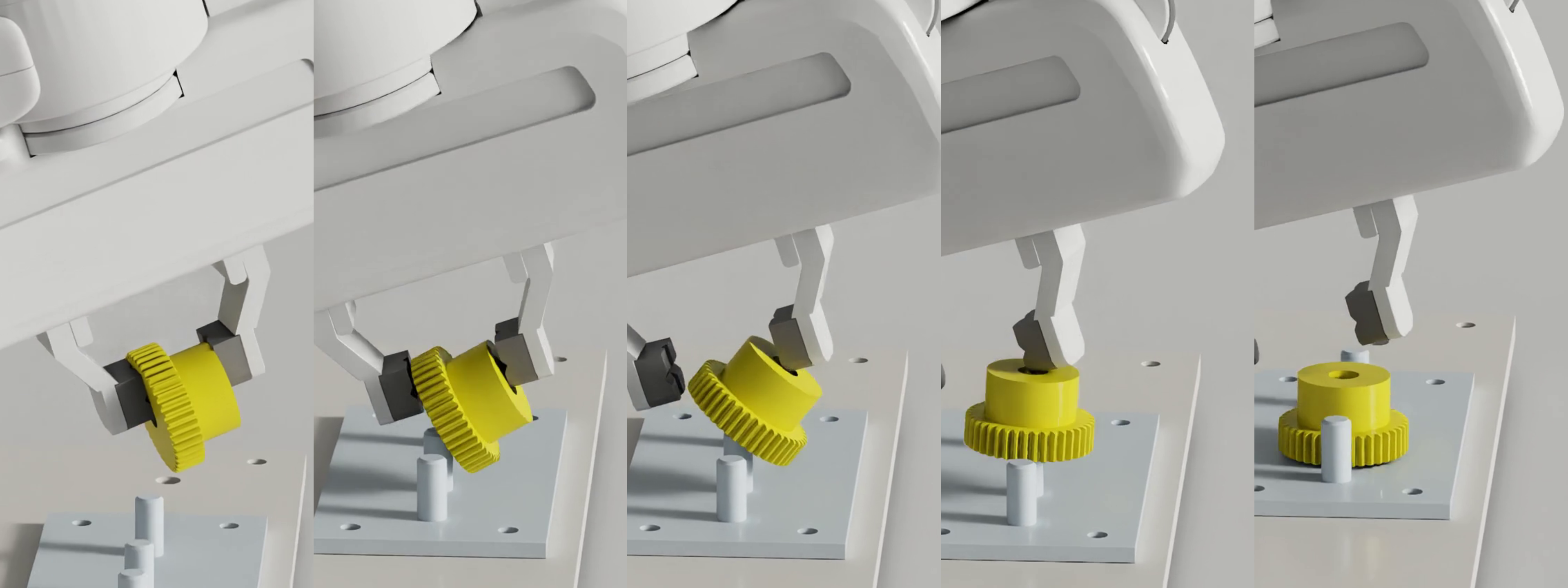
AlphaNIST brings this philosophy to contact-rich, high-precision robotic assembly in simulation. An end-to-end policy learns how to complete the task, without prescribed manipulation stages.

Narrated overview · 4:36

Ten-component assembly.

Four successful ten-part runs, using a policy trained separately from the single-component policy below.

The assembly challenge

A rotating studio view of the NIST board, with yellow movable parts shown fully assembled.
NIST Assembly Task Board #1, shown fully assembled.

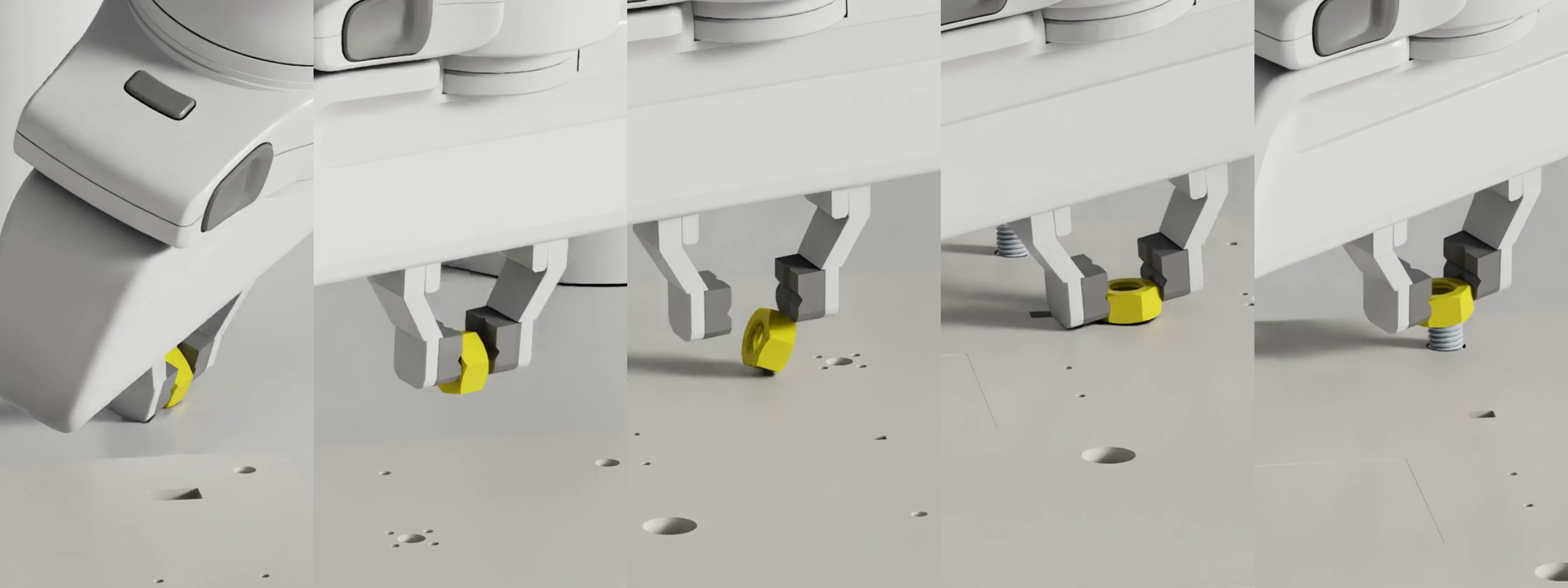
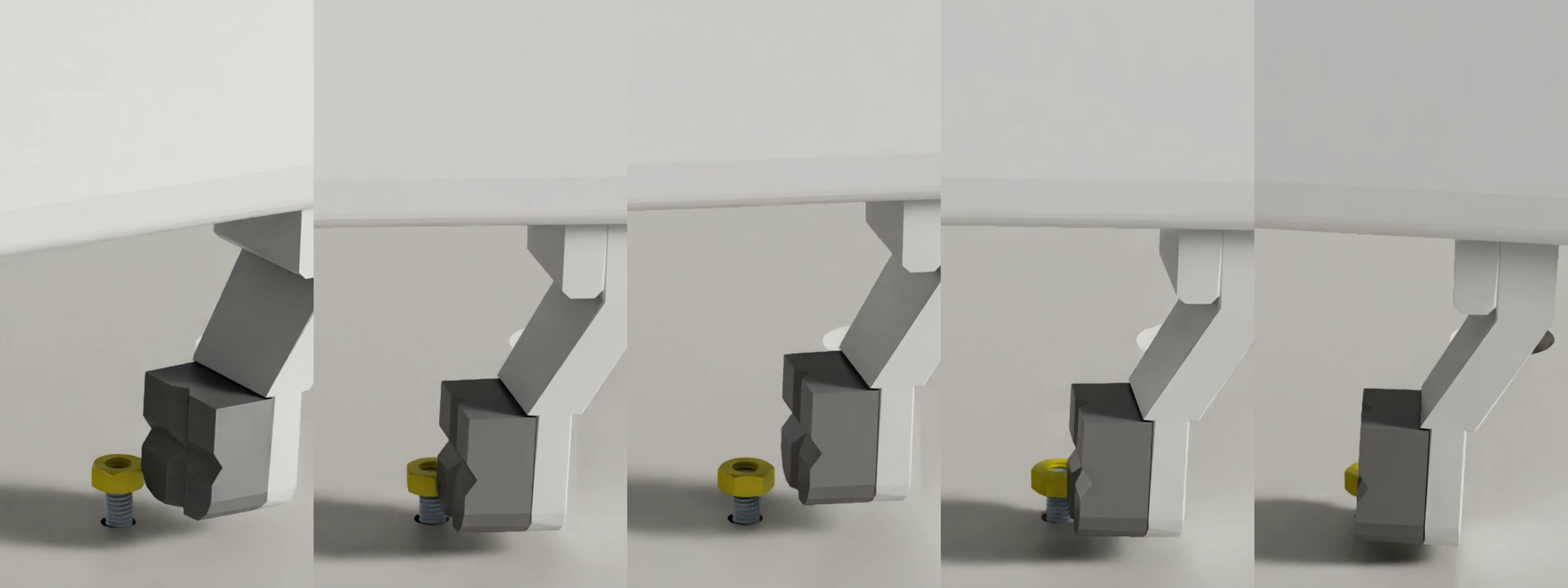
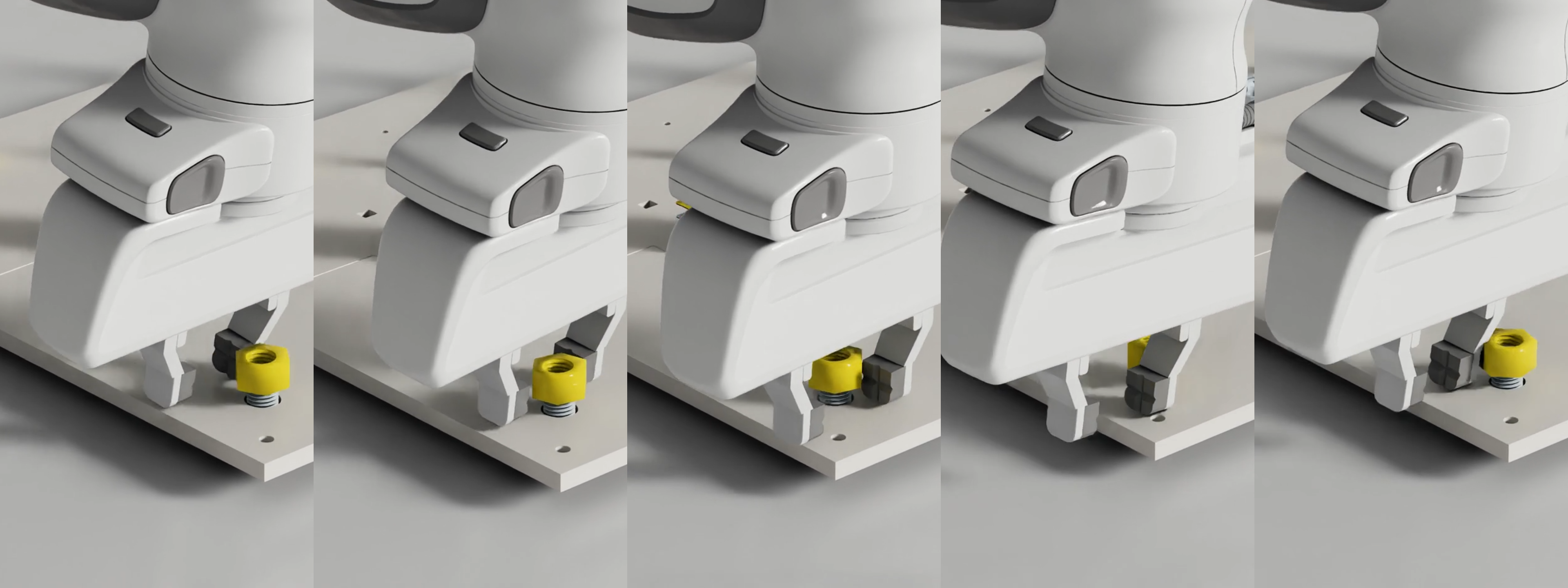
The NIST board has twenty assembly tasks, with parts as small as 4 mm. Fitting one part can take several changes of grasp and orientation. Tight clearances leave little room for error: a tilted nut can jam or cross-thread.

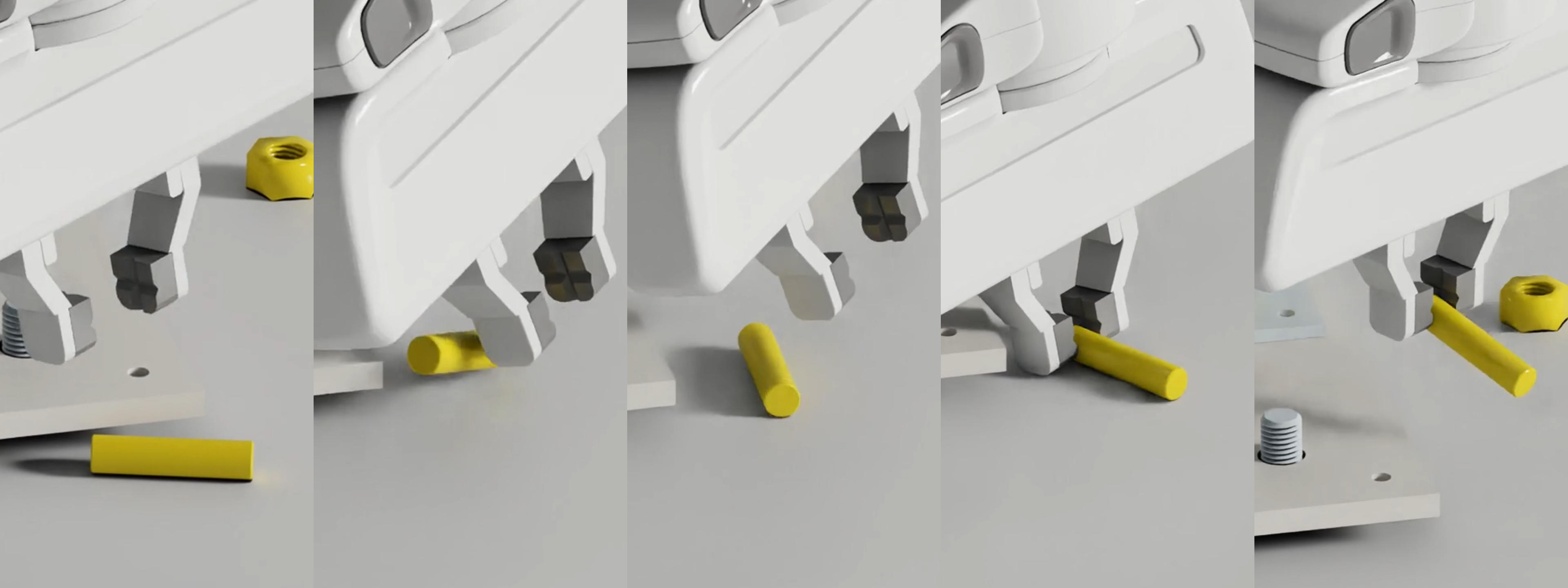
With several parts, the robot also has to choose an order. An installed component may block the gripper’s next move.
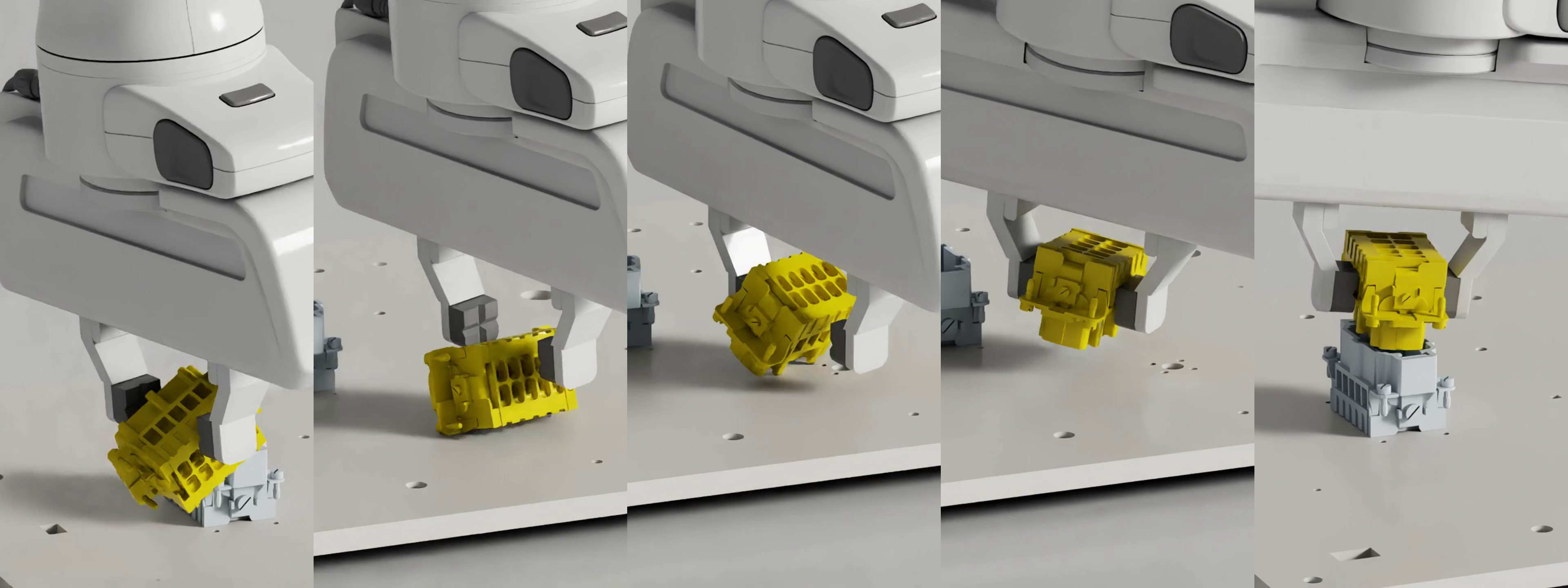
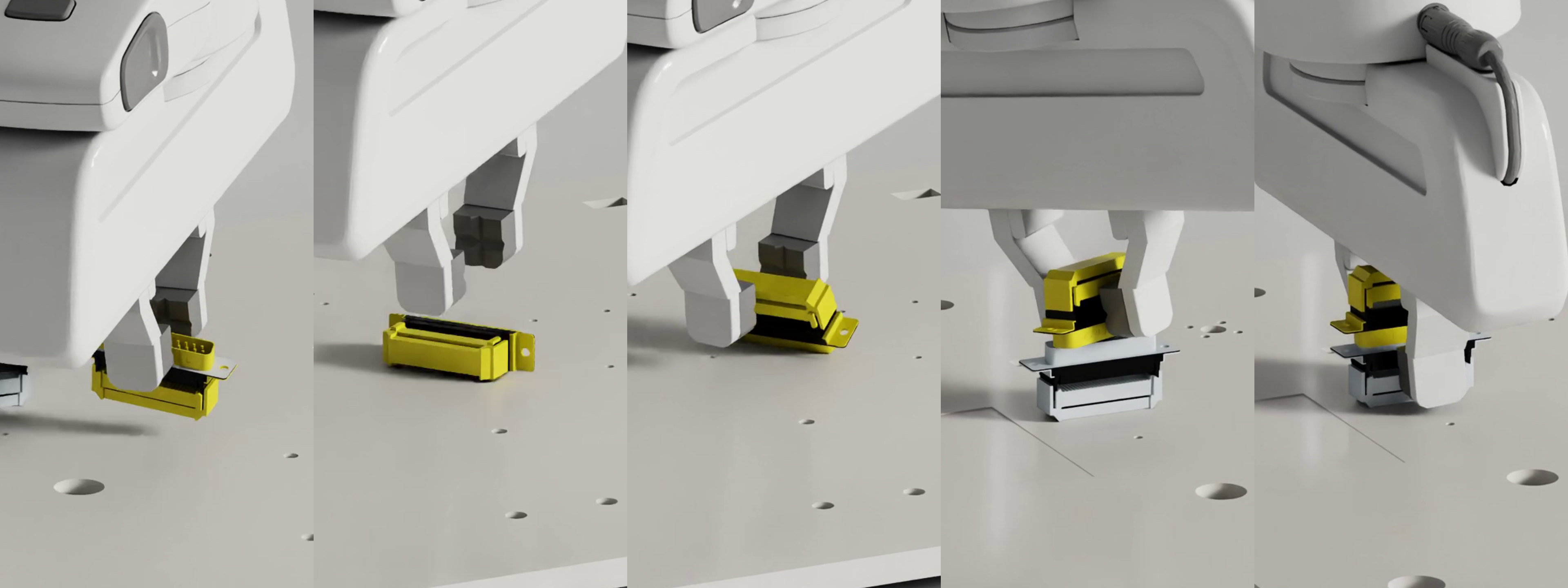
Robots can be creative—if we give them room.

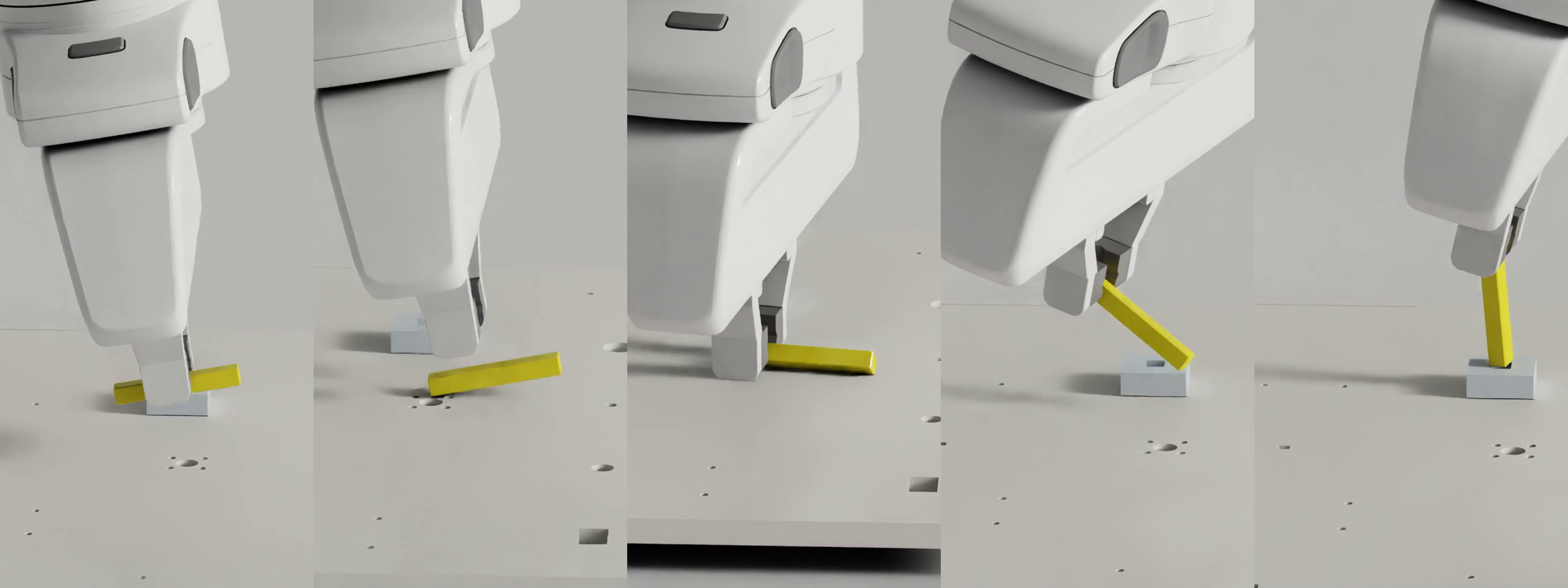
Trying to prescribe every maneuver means anticipating how the robot should respond as contacts and obstructions change. A two-finger gripper may also need solutions quite different from those that come naturally to a human hand.

Perhaps the answer is to stop telling the robot how we think the task should be done, and let it learn how to get there. We give it a binary task reward for success and train it through vast amounts of diverse experience. That leaves room for the robot to discover solutions we might never have thought to teach.

How the robot learns

Experience diversity:
heterogeneous assets and initial states

One policy trains across twenty heterogeneous assemblies, starting from loose parts, in-hand grasps, and partial assemblies cached in simulation.

Near-complete starts let the robot practice finishing an assembly before it can solve the whole task. The cache supplies starting states, not demonstrations.

Examples of diverse training starting states

Success-guided sampling

Beta sampling favors starting states the policy solves about half the time, while giving every state a chance. Progress on one state can make another solvable; its sampling weight then changes with new outcomes.

Success-guided sampling: starting states are selected, data flows into the policy, and success estimates update the sampling weights.
Starting states receive different amounts of practice as the policy learns. SGS project ↗

Single-component assembly experiment

One policy performs all twenty assembly tasks, with one component to assemble in each run.

With binary task rewards, one policy trained across all twenty tasks reaches higher training success than twenty separate specialists. Adding rewards for reaching and alignment reduces success in this experiment.

Figure 5 comparison: success by task for four training conditions, alongside overall success of 98.2% for a shared policy with binary rewards, 81.4% for separate policies with binary rewards, 17.8% for a shared policy with dense rewards, and 78.3% for separate policies with dense rewards.
Swipe or scroll horizontally to view the full figure.Training success across varied starting states.

Emergent assembly behavior